EJ Popoola
UncommittedRankings sourced from 247Sports, ESPN, On3, and Rivals. Learn how we aggregate data →
Scout Report
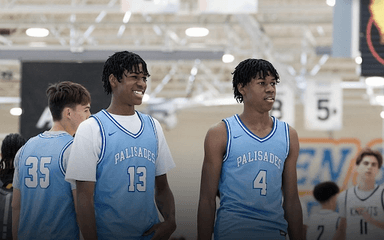
Two Popoolas on the same wing, same class, same school — that's not a coincidence Palisades coaches take lightly. EJ is the second name on that depth chart, but ignore him at your own risk. At 6-5 with length to spare, he's the kind of forward who makes a roster deeper just by showing up to practice every day.
Background
EJ Popoola plays his high school ball at Palisades, sharing the wing with his brother OJ, a 2027 small forward ranked #193 nationally. Growing up in the same household as a fellow Division I-caliber prospect means competition started early — probably in the driveway before it ever hit a gym floor. That kind of built-in rivalry tends to sharpen fundamentals faster than any camp circuit could. Both brothers are still carving out their separate identities within the same program, which creates an interesting dynamic for Palisades' coaching staff to manage.
Playing Style
Popoola operates as a traditional small forward who's comfortable playing off movement rather than dominating the ball. He reads the floor well in secondary transition, filling lanes and making himself available rather than forcing possessions. His frame at 6-5 lets him guard multiple perimeter spots, and he shows awareness defensively — closing out under control instead of flying at shooters and getting beat backdoor. Offensively, he's not yet a high-volume scorer, but he understands spacing and knows how to relocate when the defense collapses on a drive. There's a patience to his game that suggests a kid who's still growing into his body and figuring out exactly where his advantages lie. He competes hard in the margins — rebounding, deflections, the possessions that don't show up on a stat sheet but win coaches over in film sessions.
Strengths
Length and positional versatility are the calling cards here. A 6-5 frame on the wing gives him the tools to defend forwards and guards depending on matchup, and that kind of flexibility is valuable at every level of basketball. He plays within structure, which means he's not going to blow up an offense with bad shot selection or turnovers. Coaches watching tape will notice a kid who competes on defense and doesn't need the ball to impact winning.
Areas to Watch
The offensive package needs expansion — shot-creation off the dribble and a more consistent jumper would separate him from the pack of similar-sized wings. Strength is the other obvious piece; added mass will help him finish through contact and hold up defensively against bigger forwards as competition levels rise. Right now he's more of a role player than a primary option, and unlocking a reliable perimeter shot would change that trajectory quickly.
Player Comparison
His profile — long, defense-first wing who plays connective basketball without needing the ball — echoes early-career Kyle Anderson, minus the ball-handling polish at this stage. Like Anderson, Popoola's value comes from processing the game at a slower, more deliberate pace rather than athleticism alone. It's an imperfect comparison given the gap in experience, but the archetype of a smart, long wing who affects winning indirectly tracks.
Recruitment
No offers have come in yet, and at #209 nationally in the 2027 class, Popoola is firmly in the evaluation stage rather than the decision stage. That's not unusual for a sophomore-aged prospect still developing physically. Expect interest to pick up through AAU circuits and any film from Palisades this season — programs looking for low-maintenance, multi-positional wings will be the first to circle back. A commitment timeline realistically sits a year or two out as his recruitment takes shape.
Projection
The college ceiling here is a rotational wing at the mid-major to low-major level, with upside toward a high-major bench role if the jumper and strength develop as expected. Professionally, the path would run through continued development as a connector-type forward — someone who guards, rebounds, and moves the ball rather than a primary scorer. Realistic outcomes range from a solid four-year college contributor to, with significant physical growth, a prospect who sneaks into high-major conversations by his senior year.
Updated Oct 16, 2026 · Analysis by PrepRadar Scouting Team